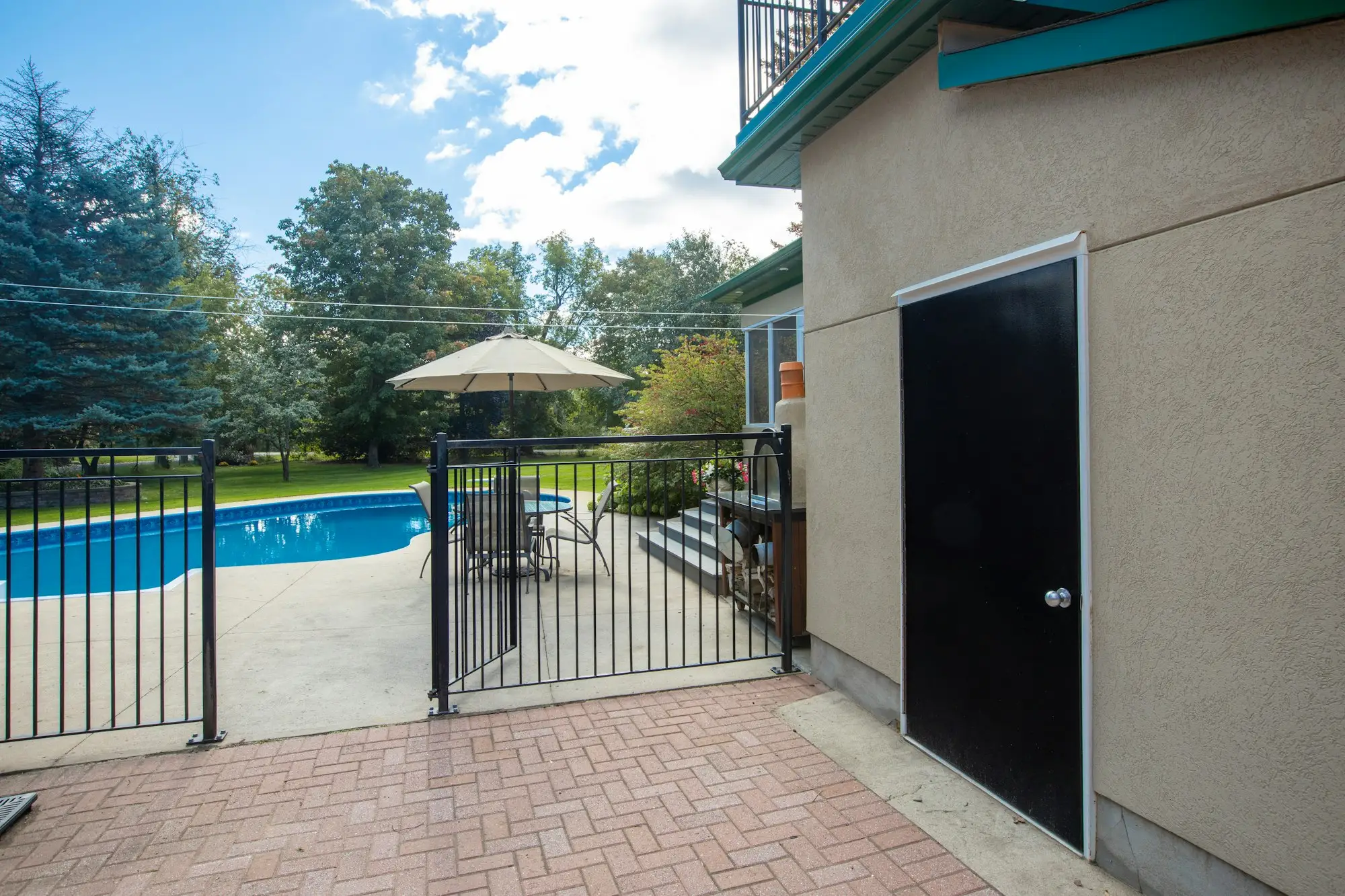
A barrier, not a decoration
Pool barrier rules exist to keep young children from reaching the water unsupervised. In New Jersey, local construction officials enforce them, and specifics can vary — so always confirm requirements with your town before you buy material.
What inspectors commonly look at
Requirements differ by jurisdiction and pool type, but these items come up again and again.
- Overall height — commonly a minimum of 48 inches
- Gaps between pickets and at the bottom of the fence
- Horizontal rails or decorative elements that could be used as footholds
- Gates that open away from the pool, close on their own, and latch automatically
- Latch height, so small children cannot reach it
- Doors and windows from the house that open into the pool area
Choosing a material
Aluminum is the most common pool fence because it meets barrier needs while keeping the pool visible from the house. Some vinyl and wood styles also work when designed correctly. Chain link can comply, but mesh size matters.
Keep it working
Test every gate regularly. Hinges and latches drift out of adjustment as fences settle, and a gate that no longer closes on its own defeats the purpose of the fence.
Want an expert opinion on your property?
We will take a look, explain what we see, and give you a written estimate.