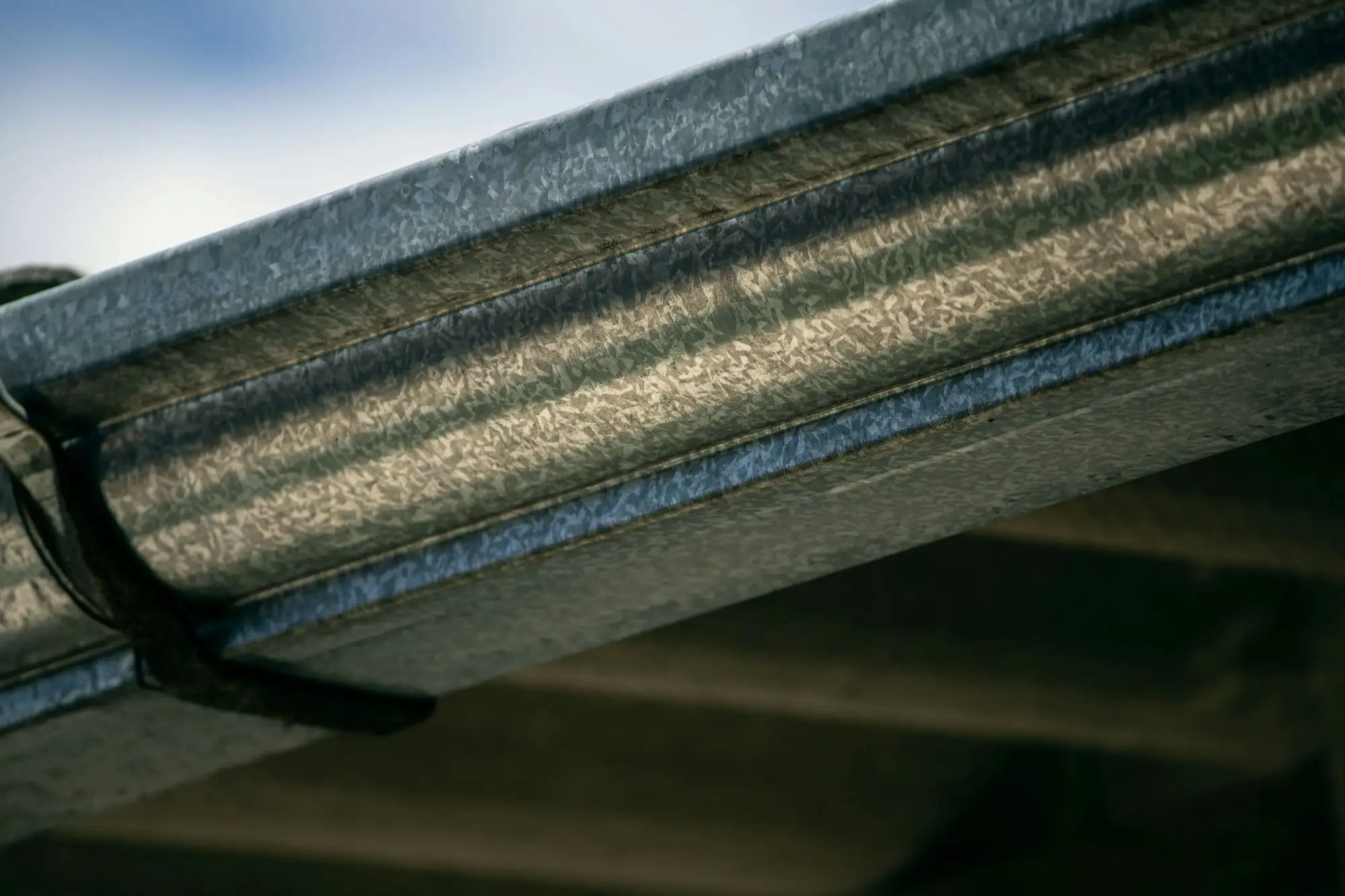
Sectional vs. seamless gutters
Sectional gutters come in fixed lengths that are joined together along the eave. Every joint is a place where sealant can fail, debris can catch, and water can drip onto fascia boards and siding.
Seamless gutters are formed on site from a coil of pre-painted aluminum, cut to the exact length of each eave. The only joints are at the corners and the downspout outlets, which means far fewer places for leaks to start.
Where seamless gutters make the biggest difference
Seamless gutters are worth it on almost any home, but especially when:
- Your eaves are long, so a sectional system would need several joints on each run
- Previous gutters leaked at the seams and stained the fascia or siding
- You are replacing the roof or siding and want new, clean edges to match
- You want a particular colour to coordinate with new trim
- Heavy rain regularly overflows your current gutters, so a properly sized system is needed
Size matters as much as seams
Many gutter problems blamed on clogs are really sizing problems. Large roof planes, steep pitches, and valleys that concentrate water can overwhelm standard gutters during a hard rain. Six-inch gutters and larger downspouts carry noticeably more water than five-inch systems.
A good installer measures the roof area each run will drain and places downspouts so no section is carrying too much. They also pitch each run toward its outlet so water never sits.
What about gutter guards?
Guards are most useful under heavy tree cover, especially pines, where gutters clog several times a year. They reduce cleaning rather than eliminate it, and the right guard depends on the kind of debris your trees drop. Skip them if you have no overhanging trees — they add cost without much benefit.
Questions to ask before you buy
- What size gutters and downspouts do you recommend for each side of the house, and why?
- Where will the downspouts discharge, and how far from the foundation?
- How will the gutters be fastened — hidden hangers into the rafter tails, or spikes?
- Will you check or replace damaged fascia before hanging the new gutters?
- Do I need guards, given the trees around my home?
The bottom line
For most homes, seamless gutters are worth it: fewer leaks, a cleaner look, and less maintenance over the life of the system. They work best when sized to the roof and installed with good hangers and well-placed downspouts. Learn more about our seamless gutter installation, or see how gutters connect to ice dams and wet basements.
Want an expert opinion on your property?
We will take a look, explain what we see, and give you a written estimate.